
Key Takeaways
- Shilajit is a mineral-rich resinous compound formed in mountain rock; its primary bioactive compound is fulvic acid
- The strongest clinical evidence supports benefits for testosterone, sperm quality, and mitochondrial energy production
- Cognitive and anti-inflammatory benefits are promising but require more human trial data before firm conclusions
- Heavy metal contamination from low-quality products is the most serious safety risk – third-party testing is non-negotiable
- Effects build over 6-12 weeks; this is not an acute stimulant
- Pregnant women, people with gout, thyroid conditions, or hormone-sensitive cancers should consult a physician before use
- Resin form generally has higher bioavailability than capsules
Shilajit occupies a genuine middle ground in the supplement world – more research behind it than most herbal products, but not yet at the level of evidence we’d demand from a pharmaceutical intervention.
What makes it worth taking seriously is the mechanistic coherence. The fulvic acid pathway, the mitochondrial support evidence, the replicated testosterone findings across multiple small trials – these aren’t random anecdotes. They form a consistent picture of a compound that works through real biological mechanisms.
What makes caution warranted is product quality. The same compound that has genuine clinical support in purified form can be a heavy metal exposure risk in unpurified form. The difference between a beneficial supplement and a harmful one here is entirely about sourcing and testing – which places the burden on consumers to choose carefully.
For most healthy adults looking for natural support for energy, recovery, or testosterone, shilajit at the right dose from a verified source is a reasonable choice. It’s not magic, and it won’t compensate for poor sleep, poor nutrition, or inadequate training. But as a foundational supplement, the evidence supports giving it a genuine trial.
Shilajit has been used in Ayurvedic medicine for over two thousand years. It’s also one of the more genuinely researched herbal substances available – which makes it unusual in a supplement market where most products are backed by little more than marketing.
But research doesn’t mean risk-free, and “natural” doesn’t mean appropriate for everyone. This guide walks through what the evidence actually shows about shilajit benefits, where that evidence is strong, where it’s thin, and what the side effects look like in practice.
What Shilajit Actually Is
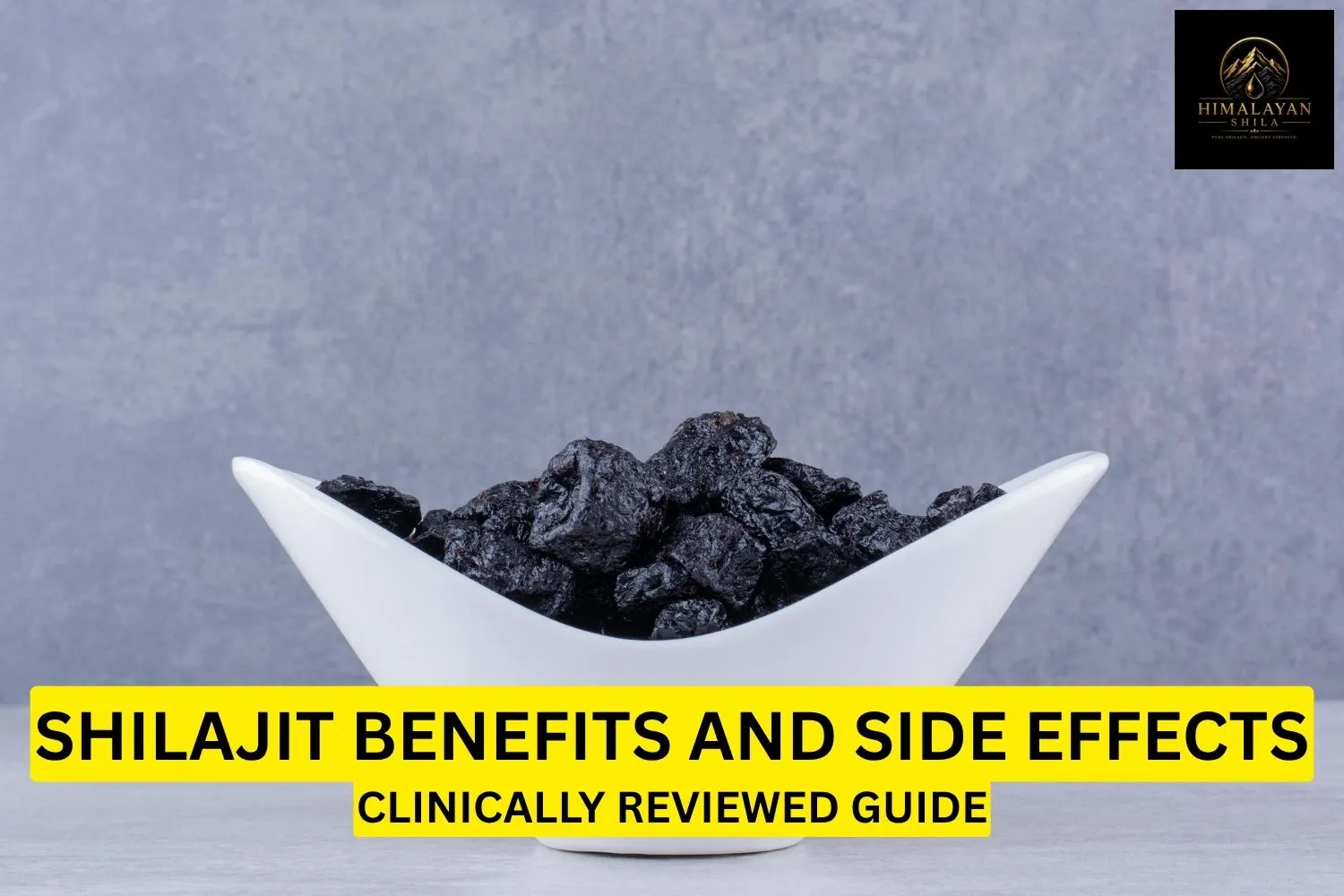
Shilajit is a thick, resinous substance that forms over centuries as plant and organic matter decomposes between layers of rock in mountain ranges – primarily the Himalayas, Altai, Caucasus, and Tibetan Plateau. The result is a mineral-dense compound that oozes from rock crevices during warmer months.
It’s not a plant extract or a synthesized compound. It’s more accurately described as a geological product – one that concentrates minerals, trace elements, and bioactive organic compounds through an extraordinarily slow natural process.
The color ranges from dark brown to black. The texture is waxy. And raw, unprocessed shilajit is not something you’d want to consume without purification – more on that below.
The Active Compound That Matters Most: Fulvic Acid
Most of shilajit’s studied health effects trace back to fulvic acid, which typically makes up 15-20% of high-quality purified shilajit. Fulvic acid is an organic compound produced during the decomposition of plant matter, and it has some genuinely interesting properties.
At the cellular level, fulvic acid improves the permeability of cell membranes, which helps nutrients – minerals, amino acids, antioxidants – get absorbed more efficiently. It also acts as a carrier molecule, binding to minerals and transporting them into cells.
This mechanism is part of why shilajit is sometimes described as an “enhancer” of other nutrients and supplements rather than just a standalone compound.
Shilajit Benefits: What the Research Shows
The following is organized by evidence strength – because not everything attributed to shilajit is equally well-supported.
Testosterone and Male Fertility
This is the most studied area, and the evidence is reasonably solid for a natural compound.
A 2015 clinical trial published in Andrologia (Pandit et al.) followed 75 infertile men over 90 days of purified shilajit supplementation. The results showed statistically significant improvements in sperm count, sperm motility, and sperm morphology. Testosterone levels also increased significantly compared to placebo.
A separate 2015 study in the Journal of Ethnopharmacology found increases in total testosterone, free testosterone, and dehydroepiandrosterone (DHEA) in healthy male volunteers aged 45-55 after 90 days of supplementation.
The effect sizes in both studies are real but not dramatic. Shilajit is not a testosterone replacement – it appears to support the body’s natural testosterone production rather than forcing a hormonal response. For men with suboptimal levels due to age, stress, or nutritional gaps, that distinction matters.
Evidence strength: Moderate – multiple human trials with consistent direction, though studies are small.
Energy and Mitochondrial Function
One of the more compelling mechanisms in shilajit research involves mitochondria – the cellular structures responsible for energy production.
A 2012 study published in Journal of Alzheimer’s Disease found that fulvic acid and other components of shilajit helped preserve mitochondrial membrane integrity and supported ATP synthesis – essentially helping cells produce energy more efficiently.
In practical terms, this is the mechanism behind reports of improved stamina, reduced fatigue, and better physical endurance. The effect isn’t stimulant-based; it’s more fundamental than that. Rather than forcing alertness, it appears to support the underlying cellular machinery that generates energy.
Evidence strength: Moderate (mechanistic studies strong; larger human trials limited).
Cognitive Support and Brain Health
Shilajit has attracted interest in neuroscience research, partly because of fulvic acid’s potential to inhibit tau protein aggregation – a process associated with Alzheimer’s disease progression.
A 2012 review in the International Journal of Alzheimer’s Disease outlined the theoretical case for shilajit as a cognitive support compound, noting its antioxidant activity, mitochondrial support, and potential neuroprotective effects.
This is promising but very preliminary. None of this constitutes evidence that shilajit prevents or treats Alzheimer’s disease. What it does suggest is that the compound has mechanisms worth studying further.
Evidence strength: Early/emerging – interesting mechanistic evidence, insufficient human clinical data.
Iron-Deficiency Anemia
Here the evidence is more specific and somewhat surprising. Fulvic acid’s ability to bind and transport minerals may enhance iron absorption, and some research suggests shilajit supplementation can modestly improve hemoglobin levels and red blood cell count in iron-deficient individuals.
This is a context where the mineral-transport mechanism of fulvic acid has a fairly direct practical application.
Evidence strength: Preliminary – limited human studies, but mechanistically plausible.
Anti-Inflammatory and Antioxidant Effects
Multiple laboratory and animal studies have documented antioxidant and anti-inflammatory activity in shilajit compounds. The clinical relevance for humans is harder to quantify – most of the direct evidence comes from in vitro (cell culture) and rodent models rather than human trials.
What practitioners often observe anecdotally is reduced post-exercise soreness and inflammation in regular users. Whether this is directly attributable to shilajit’s anti-inflammatory properties or to the cumulative effects of improved mitochondrial function and nutrient delivery is difficult to separate.
Evidence strength: Weak to moderate – animal and lab evidence strong; human translation uncertain.
High-Altitude Adaptation
Traditional Himalayan use of shilajit includes altitude sickness prevention, and there’s actually some mechanistic support for this. Shilajit appears to stimulate erythropoiesis (red blood cell production) and may improve oxygen utilization at the cellular level.
For climbers, trekkers, or athletes training at elevation, this is one of the more practical traditional applications. Clinical evidence in humans is limited, but the theoretical basis is more credible than it might first appear.
Evidence strength: Traditional + preliminary mechanistic; limited clinical trials.
Side Effects and Safety Concerns
Shilajit’s side effect profile is generally mild in purified, quality-tested forms. The main concerns:
Heavy metal contamination
Itis the most serious risk, and it’s product-specific rather than intrinsic to shilajit itself. Raw or low-quality shilajit can contain lead, mercury, and arsenic at harmful levels. The FDA has issued specific warnings about contaminated products. This is the primary reason sourcing and third-party testing matter enormously.
Uric acid elevation
It has been reported in some users, which can worsen gout symptoms. If you have a history of gout or kidney stones, discuss this with a doctor before starting.
Hormonal effects
because shilajit can influence testosterone and potentially thyroid hormones, people with hormone-sensitive conditions should approach it carefully.
Digestive discomfort
It is occasionally reported, particularly at higher doses or when taken on an empty stomach. Starting with a lower dose and taking it with food or warm water usually resolves this.
Allergic reactions
These are rare but possible. Discontinue use if you experience itching, rash, dizziness, or rapid heart rate after taking it.
Who Should Avoid Shilajit
Some groups should either avoid shilajit entirely or consult a physician before use:
- Pregnant or breastfeeding women
no adequate safety data exists for either context - People with sickle cell anemia, hemochromatosis, or thalassemia
shilajit may increase iron absorption, which is problematic in these conditions - Those taking thyroid medications
ashwagandha (often combined with shilajit in Gold formulations) has documented interactions with levothyroxine; shilajit alone may also affect thyroid function - People with gout
uric acid elevation risk - Anyone with hormone, sensitive cancers
the testosterone-supporting effects are contraindicated - Children
no pediatric safety data
How to Take It: Dosage and Timing
There’s no universally agreed-upon clinical dose for shilajit because the research trials have used varying amounts. The doses most commonly studied in human trials fall between 250 mg and 500 mg daily of purified resin or standardized extract.
For resin forms, a pea-sized amount – roughly 300-500 mg – dissolved in warm (not boiling) water, milk, or a protein shake once or twice daily is the standard approach.
On timing:
shilajit is not a stimulant, so there’s no strong pharmacological reason to take it at a specific time. Morning use is common because adaptogens tend to support daytime energy regulation. Post-workout timing also makes sense given the mitochondrial and recovery-support mechanisms. Consistency matters more than precision.
Give it at least 8 weeks before drawing conclusions about whether it’s working. Adaptogens don’t produce overnight results – the effects accumulate gradually.
Common Mistakes of taking Himalayan Shilajit
Expecting quick, dramatic results.
Shilajit is not a stimulant. People who stop using it after two weeks because they “didn’t feel anything” have typically not given it enough time.
Choosing cheap, untested products.
This is the most consequential mistake. A product without third-party heavy metal testing is a genuine health risk, not just a quality issue.
Taking it with extremely hot liquids.
Very high temperatures may degrade some bioactive compounds. Warm water works; boiling water may not.
Conflating traditional claims with clinical evidence.
Ayurvedic tradition attributes a very wide range of benefits to shilajit. Some of those have clinical support. Many don’t yet. Reading selectively is important.
Exceeding the recommended dose thinking more is better.
There’s no evidence that higher doses produce proportionally better results, and some evidence that high doses increase the risk of side effects.
How to Choose a Safe Shilajit Product
This deserves more emphasis than it usually gets in supplement guides.
Look for:
- Third-party heavy metal testing with a publicly available Certificate of Analysis (COA). This is non-negotiable.
- Disclosed fulvic acid content – a meaningful shilajit product should specify this percentage. Reputable resin products generally contain 60-80% fulvic acid.
- Sourcing transparency – verified Himalayan or Altai origin with altitude information
- No proprietary blend concealment – you should know what’s in the product and at what concentration
- GMP (Good Manufacturing Practice) certification on the manufacturing facility
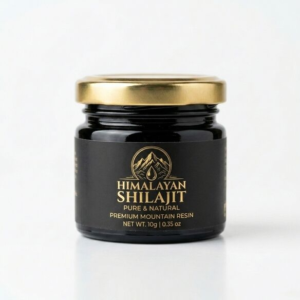
Himalayan Shila’s shilajit resin is third-party heavy metal tested and discloses fulvic acid concentration – the baseline standard any quality product should meet.
Conclusion
Shilajit has earned its growing presence in evidence-based wellness conversations – not because of ancient reputation alone, but because a meaningful body of modern research has begun validating specific mechanisms and outcomes. The testosterone support data is real. The mitochondrial energy evidence is real. The cognitive research is early but genuinely interesting.
The caveats are equally real. Product quality is everything here. And individual variation in response means some people benefit significantly while others notice little.
If you’re going to try it, use a purified resin with disclosed fulvic acid content, verified sourcing, and third-party heavy metal testing. Give it three months. Track how you feel. And if you have any underlying health conditions, loop in your doctor first – not as a formality, but because some interactions and contraindications genuinely matter.
Himalayan Shila’s purified shilajit resin is sourced from high-altitude Himalayan rock, third-party tested for heavy metals, and discloses fulvic acid content on every batch.
[Explore the product →
FAQs
Q1 : What does shilajit actually do to your body?
Shilajit’s primary mechanisms include improving cellular energy production (via mitochondrial support), enhancing mineral and nutrient absorption (via fulvic acid), supporting natural testosterone production, and providing antioxidant and anti-inflammatory activity. The effects build over weeks rather than occurring acutely.
Q2 : Is shilajit safe for daily use?
For healthy adults using purified, third-party tested shilajit at recommended doses, daily use appears safe based on current evidence. Most human trials studied supplementation over 90-day periods without significant adverse events. Long-term safety data beyond 90 days is limited, which is worth acknowledging.
Q3 : Can women take shilajit?
Yes, and the benefits aren’t exclusively male. Women may see benefits related to energy, cognitive clarity, iron absorption, and anti-inflammatory effects. However, women with PCOS, hormone-sensitive conditions, or who are pregnant or breastfeeding should consult a physician first.
Q4 : How long does it take for shilajit to work?
Most people notice initial changes – usually in energy levels or sleep quality – within 2-4 weeks. More meaningful changes in recovery, stamina, or mood typically become apparent at the 6-8 week mark. Testosterone-related effects in the clinical studies were measured at 90 days.
Q5 : Is shilajit resin better than capsules?
Resin is the least processed form and generally has higher bioavailability. Capsules offer convenience and easier dosing, but often contain lower concentrations of active compounds, fillers, or both. For therapeutic purposes, resin is the preferred form among practitioners.
Q6 : Can shilajit increase testosterone levels?
Human clinical trials have shown statistically significant increases in testosterone with purified shilajit supplementation. The effect is real but moderate – supporting natural production rather than replacing it. It is not comparable to testosterone replacement therapy.
Q7 : What are the side effects of shilajit?
In purified, quality-tested forms, side effects are generally mild: occasional digestive discomfort, rare allergic reactions, and potential uric acid elevation. The most serious risks come from contaminated products containing heavy metals – which is why sourcing and third-party testing are critical.
Q8 : Can I take shilajit with other supplements?
Generally yes. Shilajit is commonly combined with ashwagandha, gokshura, creatine, and whey protein without known negative interactions. The fulvic acid in shilajit may actually improve the absorption of other nutrients. If you take prescription medications, particularly thyroid medications, blood thinners, or hormone therapies, consult your doctor first.
Disclaimer
This article is for informational and educational purposes only and does not constitute medical advice. It should not replace consultation with a qualified healthcare professional. Individual responses to supplements vary. Statements about shilajit have not been evaluated by the FDA. Shilajit products are not intended to diagnose, treat, cure, or prevent any disease. If you have a medical condition or take prescription medications, consult your physician before starting any new supplement.