
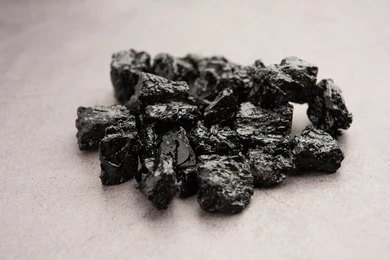
Shilajit is a natural resinous exudate that forms over centuries inside high-altitude Himalayan rock formations. It has been used in Ayurvedic medicine for over 3,000 years, and modern research is beginning to explain why – though not all of the traditional claims have been scientifically confirmed yet.
This guide covers everything. Where shilajit comes from, what it contains, what the evidence says about its benefits, how to tell real from fake, and how to use it if you decide to try it. At Himalayan Shila, we source exclusively from Ladakh and Jammu & Kashmir and publish batch-specific lab certificates for everything we sell – so we have a vested interest in consumers being informed. That context is worth knowing going in.
What Is Shilajit?
Shilajit is a natural geological exudate – not a plant, not a mineral supplement in the conventional sense, and not a laboratory compound. It is a dark brown to black, tar-like resinous substance that seeps from cracks in high-altitude mountain rocks, primarily in the Himalayas, during warmer months.
The word comes from Sanskrit: shilājatu, which roughly translates as “conqueror of rocks” or “rock-invincible.” In Hindi it is written शिलाजीत. In classical Ayurvedic texts, it is classified as a Rasayana – a category of rejuvenating substances – and as a Maharasa, meaning super-vitalizer.
Physically, genuine shilajit is thick and sticky at room temperature, softens quickly in warm hands, and hardens when cold. The colour ranges from dark brown to almost black depending on the source region. The smell is distinctive: earthy, slightly bituminous, with a faint mineral quality that’s hard to describe if you haven’t encountered it. Products with no smell are almost always heavily processed, diluted, or fake.
Chemically, shilajit is extraordinarily complex – more than 80 compounds have been identified in it, including fulvic acid, humic acid, dibenzo-alpha-pyrones, and a broad spectrum of trace minerals. That complexity is part of what makes it interesting, and also what makes counterfeiting it difficult to do well.
How Is Shilajit Formed?
The formation of shilajit is genuinely slow. We’re talking centuries, sometimes longer. And the conditions required are specific enough that it can’t form just anywhere.
At elevations between 10,000 and 18,000 feet (roughly 3,000 to 5,500 metres), specific plant species – including Euphorbia royleana, Trifolium repens, and various mosses and lichens – grow in and around rock formations. Over centuries, these plants die, decompose, and become compressed between rock layers under conditions of extreme pressure, wide temperature variation across seasons, low oxygen, and unique microbial activity. That combination of factors drives a slow transformation that produces shilajit’s characteristic chemical profile.
During the brief warmer months of the year, pressure causes this semi-solid material to seep out of cracks and crevices in exposed rock faces. That’s when collectors work – often on difficult, high-altitude terrain – to harvest it before the next season.
Altitude matters more than most people realise. Higher elevation generally correlates with greater mineral density and higher fulvic acid concentration in the resulting resin. Shilajit collected at 3,500 metres tends to be chemically richer than material from lower elevations, which is why sourcing altitude is a relevant quality indicator – not just a marketing claim.
Shilajit is found in several mountain ranges globally: the Himalayas (India and Nepal), the Altai Mountains in Russia, the Caucasus, and the Karakoram. Himalayan shilajit – particularly from Ladakh and Jammu & Kashmir – is the most researched and most valued, partly due to the geological composition of those specific ranges.
At Himalayan Shila, our sourcing is specifically from J&K and Ladakh at elevations above 3,500 metres. That specificity isn’t a branding decision. It reflects where the material actually comes from and why the quality profile is what it is.
What Does Shilajit Contain?
This is where shilajit gets genuinely interesting from a chemistry perspective – and also where most brands get vague. Here’s what quality shilajit actually contains.
Fulvic Acid – The Primary Bioactive
Fulvic acid is the compound most associated with shilajit’s effects, and the one most often used to assess quality. It’s a natural organic compound produced during the decomposition of organic matter, and its molecular weight is remarkably low – approximately 2 kilodaltons (kDa). That matters because smaller molecules cross cell membranes more easily. Fulvic acid’s size allows it to carry minerals directly into cells, which is why it’s described as a mineral transporter.
Its antioxidant capacity is also significant. Fulvic acid’s ORAC (oxygen radical absorbance capacity) value is substantially higher than that of commonly cited antioxidant foods, though this doesn’t translate directly to clinical outcomes.
In terms of concentration: the industry range is typically 40-60% fulvic acid. Premium products carry 60% or above. The percentage must be verified by HPLC testing (High-Performance Liquid Chromatography – a laboratory method for precisely measuring compound concentrations) conducted by an independent, accredited laboratory. A brand claiming “high fulvic acid” without a published test certificate is making an unverifiable assertion.
Himalayan Shila’s minimum verified fulvic acid content is 60%, confirmed by Eurofins – an NABL-accredited third-party laboratory – for every batch.
Humic Acid
Humic acid is structurally related to fulvic acid but has a larger molecular weight, which limits how easily it crosses cell membranes. Its primary associations in traditional and emerging research are with gut health – prebiotic support, beneficial effects on gut bacteria, and possible detoxification properties. It’s less discussed than fulvic acid but present in quality shilajit and not without value.
Dibenzo-Alpha-Pyrones (DBPs)
DBPs are bioactive compounds found almost exclusively in shilajit – which makes them a useful authenticity marker. They’re associated with mitochondrial energy production: specifically, they appear to support the electron transport chain, the cellular mechanism through which energy (ATP) is generated. They also interact with CoQ10, a compound involved in mitochondrial function.
DBPs are part of what makes genuine shilajit difficult to synthesise artificially. A product replicating only fulvic acid misses this entire compound class.
Trace Minerals
Shilajit contains 85+ naturally occurring minerals, including iron, magnesium, zinc, copper, selenium, and manganese. These are present in ionic form – meaning they carry an electrical charge that makes them more readily absorbed than the mineral forms found in many synthetic supplements. Modern diets, even reasonably healthy ones, are frequently low in trace minerals. Shilajit provides them in a naturally balanced matrix that’s difficult to replicate in a laboratory.
Selenium
Worth mentioning separately: selenium, a trace mineral with antioxidant and immune-supportive properties, is naturally present in quality shilajit. It’s not added – it’s there because of the geological composition of the source region. In areas with selenium-deficient soils, this matters.
Shilajit in Ayurvedic Tradition
Shilajit appears in some of the oldest texts in Ayurvedic medicine. The Charaka Samhita, one of the two foundational texts of classical Ayurveda (the other being the Sushruta Samhita), classifies shilajit as a Rasayana – a category of substances traditionally associated with longevity, rejuvenation, and the maintenance of physical and cognitive vitality. The literal meaning of Rasayana is “path of essence.”
In classical Ayurvedic classification, shilajit is also called Maharasa – a super-vitalizer – and is described as having the property of Yogavahi: the ability to enhance the bioavailability and effect of whatever it’s combined with. This Yogavahi property is part of why traditional formulations often combine shilajit with other herbs.
The traditional uses attributed to shilajit across these texts include support for physical energy and stamina, cognitive sharpness (Medhya – cognitive tonic classification), urinary tract health, reproductive vitality, and general resistance to physical decline. These are described as traditional uses, not clinical claims – but what’s notable is how closely some of them align with what modern research is beginning to explore.
Geographically, the Himalayan region described in these classical texts – specifically the high-altitude zones of what is now northern India – is the same region from which quality shilajit is sourced today. There’s a continuity there that goes beyond marketing.
If you want to go deeper on the Ayurvedic context, our article on shilajit in Ayurveda covers the traditional texts in more detail.
Shilajit Benefits: What the Science Says
The honest framing here matters. Shilajit research is promising and growing, but most human studies are small and short-term. Animal studies show interesting results that don’t always translate directly to humans. Individual responses vary. What follows is a summary of what the current evidence shows – not a list of proven outcomes.
Energy and Mitochondrial Function
The mechanism connecting shilajit to energy is fairly well-understood at the molecular level. DBPs support the mitochondrial electron transport chain – the cellular process through which ATP (the body’s energy currency) is produced. Fulvic acid has also been shown in laboratory research to enhance CoQ10’s function, which plays a direct role in mitochondrial efficiency.
In practice, users typically describe the energy effect as sustained rather than sharp. It doesn’t feel like caffeine. This is consistent with a mitochondrial mechanism rather than a stimulant effect. Bhattacharyya et al. published research supporting the mitochondrial function connection, though the body of human evidence here remains limited.
Testosterone and Male Vitality
This is the most frequently cited area of shilajit research. A clinical study by Biswas et al. (2010), published in the journal Andrologia, found statistically significant increases in total testosterone levels in healthy male volunteers who took 250mg of shilajit twice daily for 90 days compared to a placebo group.
This was a controlled study in healthy men. It doesn’t tell us what happens in men with clinical hypogonadism, older men with significantly declined baseline testosterone, or men with other health conditions. The results are meaningful but context matters.
Traditional Ayurvedic use of shilajit for male vitality predates this research by millennia, which doesn’t prove efficacy but does suggest a pattern of observed effects worth taking seriously.
For a deeper look at the evidence specifically for men, see our article on shilajit benefits for men.
Cognitive Function and Brain Health
This is an area where research is genuinely early. Fulvic acid has antioxidant properties that may help reduce oxidative stress in brain tissue. Some preliminary research has also examined fulvic acid’s interaction with tau protein – which is relevant to research on age-related cognitive decline – though this work is far from conclusive.
In classical Ayurveda, shilajit’s Medhya (cognitive tonic) classification is one of its oldest attributed properties. The modern research is too preliminary to validate this specifically, but the direction is not inconsistent with traditional use.
Adaptogenic and Stress Response Effects
Adaptogens are substances that appear to help the body respond more resiliently to stressors – physical and psychological. Shilajit’s classification as a Rasayana in Ayurvedic medicine aligns with the adaptogen concept, and there’s some evidence suggesting effects on adrenal function and cortisol modulation. The mechanistic research is interesting; the human clinical evidence is thin.
Gut Health
Humic acid, one of shilajit’s components, has prebiotic properties – it may support beneficial gut bacteria. Some Ayurvedic literature also associates shilajit with digestive support. Modern research in this area is limited but beginning to emerge. It’s worth noting, not overstating.
The Yogavahi property mentioned in Ayurvedic tradition – shilajit enhancing the effect of whatever it’s taken with – could theoretically have a gut absorption mechanism, but this hasn’t been studied rigorously in humans.
Mineral Replenishment
This is probably the most straightforward benefit, and one that’s often underappreciated. Shilajit’s 85+ minerals in ionic form are genuinely useful for people whose diets are consistently low in trace minerals – which includes a large portion of the population. Athletes with high mineral turnover, older adults, and people on restrictive diets are particularly relevant groups here.
For women specifically, the iron content is worth noting. See our article on shilajit for women for more detail on this.
Anti-Ageing and Cellular Health
The antioxidant compounds in shilajit neutralise free radicals, which is associated with slower cellular ageing in general. The Rasayana classification in traditional Ayurveda explicitly connects shilajit to longevity and cellular vitality. Modern research on antioxidants and ageing is genuinely complex and contested. The traditional association exists; the clinical evidence for shilajit specifically in this area is preliminary.
Shilajit for Men vs Women
A common misconception: shilajit is only for men. It isn’t. Historically, it was used across genders in Ayurvedic medicine, and the reasons to consider it differ by person, not by gender category.
For men, the most researched areas are testosterone support, physical performance, and energy – with the Biswas et al. study being the most cited clinical reference. For a fuller breakdown, see our shilajit benefits for men guide.
For women, the more relevant angles are iron absorption support (given shilajit’s iron content and fulvic acid’s role as a mineral transporter), potential hormonal balance effects, energy, and bone health. There’s also emerging interest in shilajit’s antioxidant properties in the context of women’s health across different life stages. Our shilajit for women article covers this in more depth.
One precaution worth stating clearly: women who are pregnant or breastfeeding should not take shilajit without consulting a qualified healthcare professional. The evidence on safety in pregnancy is insufficient, and caution is warranted.
Both men and women starting shilajit should begin with a lower dose and increase gradually. If you’re managing any health condition or taking medication, consult a doctor before starting.
Shilajit Resin vs Powder vs Capsules
| Form | Bioavailability | Convenience | Processing | Best For |
| Resin | Highest potential (source-dependent) | Requires measuring and dissolving | Minimal | Those prioritising purity and traditional use |
| Powder | Variable (depends heavily on source and processing) | Easy to mix | More processed | Those who prefer mixing into drinks |
| Capsules | Fixed dose (filler quality matters) | Most convenient | Most processed | Those who prioritise convenience |
The key point here: form matters less than source and testing. A poorly sourced resin from adulterated material is worse than a carefully processed powder from a clean source. Form is the last variable to optimise, not the first.
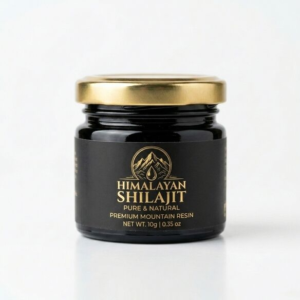
That said, resin is the traditional form, involves the least processing, and when genuinely sourced and tested, likely preserves the fullest natural compound profile. It’s why Himalayan Shila chose resin as our primary format.
For a more detailed comparison, see our guide on shilajit resin vs powder vs capsules.
How to Identify Pure Shilajit
The Indian shilajit market has a significant counterfeiting and adulteration problem. Products range from genuine high-quality resin to material that contains almost no actual shilajit. Here’s how to tell the difference.
The 5 Tests
- Solubility Test Dissolve a small amount in warm water. Genuine shilajit dissolves completely, leaving the water a deep golden-brown to dark colour with no visible residue. Incomplete dissolution or floating particles suggests adulterants.
- Temperature Test Real shilajit softens readily in warm hands and returns to a firmer state when cooled. Wax-based or plastic fakes don’t respond to temperature changes this way. If it doesn’t soften in your palm within 30 seconds, that’s a problem.
- Flame Test Genuine shilajit doesn’t burn with a direct flame – it melts, bubbles, and produces an ash residue. Adulterated products may catch fire or produce black smoke, which indicates wax or synthetic binders.
- Smell Test Authentic shilajit has a distinct earthy, slightly bituminous smell. It’s not pleasant in a conventional sense, but it’s unmistakable once you know it. Products with no smell or a sweet/artificial odour have been heavily processed or are fake.
- The Lab Certificate Test This is the only test that actually proves purity. Does the brand publish an independent, batch-specific certificate of analysis from an NABL-accredited laboratory? Not a generic badge. Not a shared certificate covering an entire product line. A certificate tied to your specific batch, showing fulvic acid percentage, heavy metals results, and microbial safety data.
Himalayan Shila publishes batch-specific Eurofins certificates for every production run. You can view our lab reports before purchasing.
For a complete guide to authenticity testing, see how to identify pure shilajit.
How to Use Shilajit
Standard Dose
For resin: a portion roughly the size of a rice grain to a small pea – approximately 300-500mg. Start at the lower end if you’re new to shilajit.
Method
Dissolve the resin in warm (not boiling) water, milk, or herbal tea. It won’t dissolve properly in cold liquid. Warm golden milk is a popular traditional preparation. Some people take it directly and wash it down with warm water – that works too.
Timing
Most people take it in the morning on an empty stomach, or before physical activity. There’s no clinical evidence that one time is definitively better than another, but the morning-on-empty-stomach approach is both traditional and practically convenient.
Consistency
This is worth emphasising because it’s frequently misunderstood: shilajit is not a fast-acting supplement. Most people don’t notice meaningful effects in the first week or two. Four to eight weeks of consistent daily use is typically the minimum timeframe for noticeable changes. Expecting results in a few days and stopping when they don’t appear is the most common reason people conclude it “didn’t work.”
Cycling
Some Ayurvedic practitioners recommend an 8-week-on, 2-week-off cycling approach. This is a traditional protocol rather than a clinically proven recommendation.
What Not to Mix With
Avoid taking shilajit dissolved in chlorinated tap water – chlorine can potentially interact with some of its compounds. Warm filtered water, milk, or tea is preferable. It’s generally compatible with most foods and other supplements.
Important: Consult a qualified healthcare professional before use if you are pregnant, breastfeeding, managing a health condition, or taking prescription medication. This is not medical advice.
For a detailed dosage guide, see our shilajit dosage guide.
Shilajit Safety and Side Effects
When taken from a verified, independently tested source at recommended doses, shilajit is considered safe for most healthy adults. The safety concern isn’t really about shilajit itself – it’s about what untested products might contain.
Heavy Metal Risk in Untested Products
The primary safety concern with shilajit is heavy metal contamination from poorly sourced or unprocessed material. Shilajit naturally accumulates minerals from the surrounding rock – including potentially lead, arsenic, mercury, and cadmium. Proper purification removes these to safe levels. Independent testing confirms it. Products that haven’t been tested cannot make this assurance, and there are documented cases of heavy metal toxicity from low-quality shilajit.
This is not a reason to avoid shilajit. It’s a reason to buy only from brands that test.
Who Should Avoid Shilajit or Consult a Doctor First
- Pregnant or breastfeeding women – insufficient safety data
- People with haemochromatosis (iron overload condition) – shilajit’s iron content may be contraindicated
- People with sickle cell anaemia or thalassaemia – same reasoning
- People taking blood thinners or immunosuppressants – potential interactions
- Children under 18 – no established paediatric safety data
Possible Side Effects
Most side effects reported are mild and associated either with excessive dosing or low-quality products:
- Digestive discomfort when starting (reduce dose and increase gradually)
- Allergic reactions – rare, but discontinue and consult a doctor if they occur
- Elevated uric acid levels in susceptible individuals – relevant for those with gout
Higher doses don’t mean better results. The therapeutic range is quite narrow and going significantly above it doesn’t improve outcomes.
For a complete safety guide, see our shilajit side effects and safety article.
How to Choose Quality Shilajit in India
Five things to verify before buying:
- Independent lab certificate – batch-specific
The certificate should come from an NABL-accredited laboratory (Eurofins, SGS, or equivalent) and be tied to your specific production batch – not a generic document covering an entire product line. If a brand can’t or won’t show you this, don’t buy from them.
- Fulvic acid percentage – stated and verified
Minimum 60% for a quality product. The percentage must appear on the lab certificate, not just in marketing copy.
- Heavy metals screening – passed
The certificate should show lead, arsenic, mercury, and cadmium results against FSSAI or USP reference limits.
- Single ingredient
The product should contain shilajit. Just shilajit. No fillers, binders, carriers, or additives. If the ingredient list has more than one item, ask why.
- Traceable sourcing
“Himalayan sourced” tells you almost nothing. A specific region – Ladakh, Uttarakhand, Spiti, J&K – with some explanation of sourcing altitude is a meaningful claim. Vague geographic branding is not.
Check the brand’s FSSAI registration number and verify it on the government portal if you want additional assurance.
You can view Himalayan Shila’s batch-specific lab reports and order our pure Himalayan shilajit resin directly from our website, with free delivery across India.
Frequently Asked Questions
Q. What is shilajit made of?
Ans. Shilajit is composed primarily of fulvic acid (60%+ in quality products), humic acid, dibenzo-alpha-pyrones (DBPs), and 85+ trace minerals in ionic form. It forms through the slow decomposition of plant matter compressed between high-altitude mountain rocks over centuries.
Q. Is shilajit a drug or a supplement?
Ans. In India, shilajit is regulated as a dietary supplement and Ayurvedic product under FSSAI guidelines, not as a pharmaceutical drug. It is not approved to treat, cure, or prevent any disease.
Q. Can I take shilajit every day?
Ans. Yes, daily use is standard and generally recommended for noticeable effects. Consistency over weeks matters more than any single dose. Some practitioners suggest cycling (8 weeks on, 2 weeks off) but this is traditional guidance, not a clinical requirement.
Q. How long does it take for shilajit to work?
Ans. Most users notice subtle changes – in energy levels or sleep quality – within 2-3 weeks of consistent daily use. More significant effects, particularly around physical vitality and recovery, typically become apparent after 4-8 weeks. Anyone expecting results in a few days is likely to be disappointed.
Q. What is the difference between shilajit and ashwagandha?
Ans. Both are classified as adaptogens and Rasayanas in Ayurveda, but they’re very different substances. Shilajit is a geological exudate rich in minerals and fulvic acid. Ashwagandha is a plant root containing withanolides. Shilajit is more associated with energy, testosterone, and mineral replenishment. Ashwagandha is more associated with stress reduction and cortisol modulation. They’re sometimes used together.
Q. Is shilajit safe for women?
Ans. For most healthy adult women who are not pregnant or breastfeeding, yes. Shilajit is not gender-specific. Women who are pregnant or breastfeeding should not use it without medical guidance. Women with iron overload conditions (haemochromatosis) should avoid it.
Q. Can shilajit increase testosterone?
Ans. A controlled clinical study (Biswas et al., 2010) found statistically significant testosterone increases in healthy men taking 500mg daily for 90 days compared to placebo. This was in healthy men with normal baseline testosterone. Results in other populations may differ.
Q. What does real shilajit taste like?
Ans. Bitter, slightly earthy, with a faint mineral quality. It’s not pleasant in a conventional sense. Products that taste sweet or have no distinctive taste at all are almost certainly adulterated or heavily processed.
Q. Does shilajit expire?
Ans. Quality shilajit resin has a very long shelf life when stored correctly – away from direct sunlight, in a sealed container, at room temperature. Most products carry a 2-3 year best-before date, though the compound stability of well-stored resin can extend beyond this.
Q. Can shilajit be taken with milk?
Ans. Yes. Warm milk (not boiling) is actually one of the traditional preparations – golden milk with shilajit dissolved in it is a common Ayurvedic protocol. It also masks the taste somewhat.
Q. What is the best time to take shilajit?
Most commonly: morning on an empty stomach or 30 minutes before physical activity. This is both traditional and practically logical for energy support. There’s no strong clinical evidence that timing dramatically changes outcomes, but mornings tend to suit the intended effect.
Q. Is shilajit vegetarian or vegan?
Yes. Shilajit is a geological substance – not derived from animals. It is both vegetarian and vegan.
Q. What is the correct dose of shilajit for beginners?
Ans. Start with approximately 300mg (rice grain size for resin) per day for the first 1-2 weeks. If well-tolerated, you can increase to 500mg. Most research uses 300-500mg per day. More is not better.
Q. Where is the best shilajit sourced from?
Ans. Himalayan shilajit – particularly from Ladakh, Jammu & Kashmir is the most studied and most consistently valued. Altai (Russia) and Caucasus shilajit also exist and are used, but the compound profile and research base are strongest for Himalayan sources.
Conclusion
Shilajit is one of the more genuinely interesting substances in natural wellness. Its chemistry is real. Its traditional use is documented and ancient. And the modern research, while still developing, is pointing in directions that are consistent with what Ayurvedic practitioners have described for centuries.
What it isn’t: a miracle. A cure. A fast fix. Anyone selling it as any of those things is misleading you.
What matters most when choosing shilajit: source and testing. Not the packaging, not the price, not the number of celebrity endorsements. A batch-specific lab certificate from an accredited independent laboratory telling you the fulvic acid content and heavy metals results is the only document that actually proves what’s in the jar.
If you’re ready to try genuine, lab-verified Himalayan shilajit, explore our pure shilajit resin – sourced from Ladakh and J&K, tested by Eurofins, free delivery across India.
Medical Disclaimer
This article is for informational and educational purposes only. It does not constitute medical advice and should not be used as a substitute for advice from a qualified healthcare professional. Shilajit is a dietary supplement, not a pharmaceutical drug, and is not intended to diagnose, treat, cure, or prevent any disease. Individual results vary. Consult a qualified healthcare provider before starting any new supplement, particularly if you are pregnant, breastfeeding, managing a health condition, or taking prescription medication.