Expert Takeaway
From a functional medicine and Ayurvedic perspective, what makes Shilajit Gold interesting is the systemic approach. Rather than targeting a single biomarker, the formulation supports several interconnected systems – energy metabolism, stress response, hormonal regulation – simultaneously.
That’s both its strength and the reason results feel gradual. The body doesn’t respond to multi-system support the same way it responds to a stimulant. The change is less dramatic and more durable.
For athletes who train consistently, follow a reasonable diet, and are looking for sustainable long-term performance support rather than a quick spike, this formulation has a reasonable evidence base and a safety profile that compares favorably to most synthetic alternatives.
Something has been quietly shifting in high-performance gyms over the past few years. Not loudly – no flashy rebrands, no viral moments. Just coaches and competitive athletes gradually moving away from synthetic testosterone-support supplements and reaching for something older, and arguably more interesting.
If you’ve spent any time in serious fitness circles recently, you’ve probably heard the name. But separating the genuine science from the wellness hype around it takes a bit of work. This article tries to do exactly that.
What Is Shilajit Gold, Exactly?
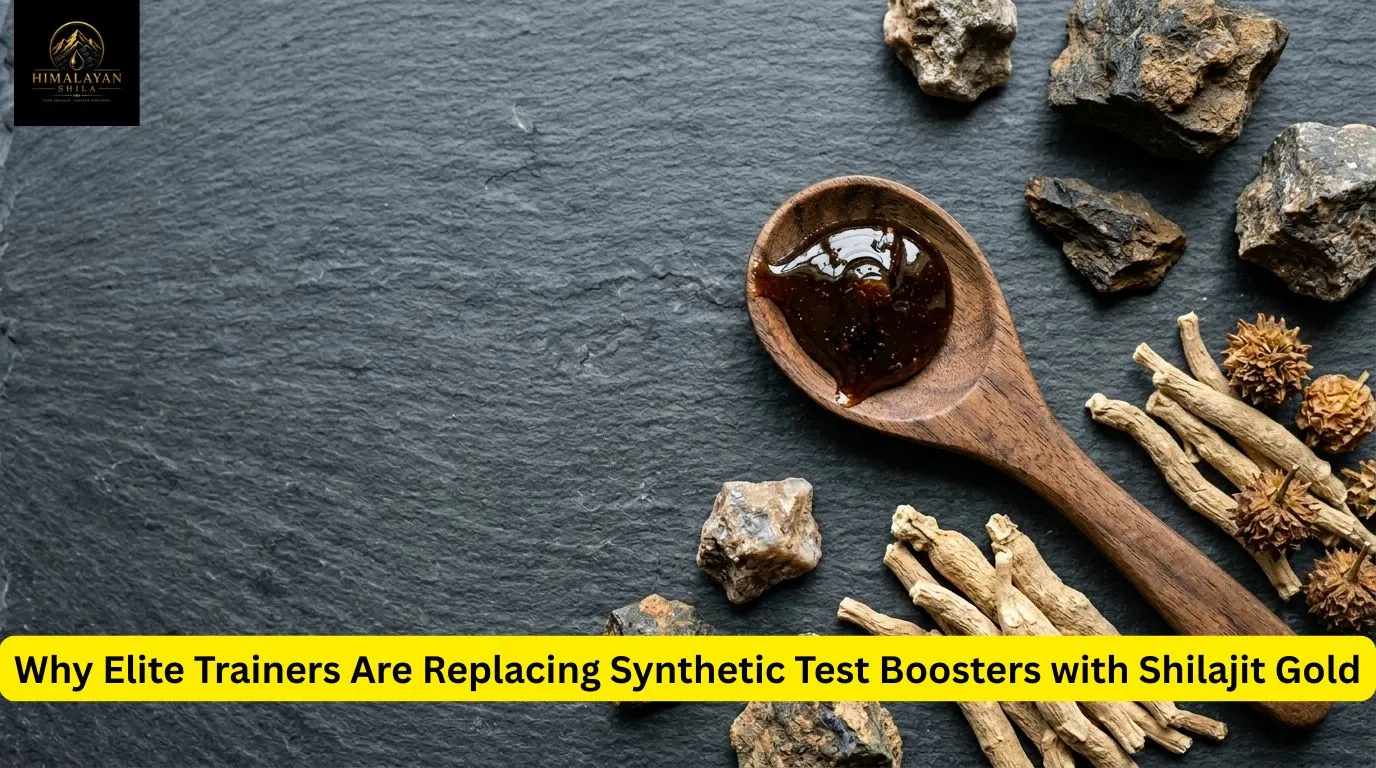
Shilajit itself isn’t new. It’s a thick, tar-like resinous substance that forms over centuries as plant matter decomposes between layers of Himalayan, Altai, or Caucasian mountain rock. The result is a mineral-dense compound rich in fulvic acid – a compound that plays a real role in cellular nutrient transport and absorption.
Shilajit Gold is a specific formulation that combines purified shilajit resin with classical Ayurvedic herbs – most commonly ashwagandha (Withania somnifera) and gokshura (Tribulus terrestris). The combination isn’t arbitrary. Each ingredient targets a different aspect of physical performance and hormonal balance, which is partly why the formulation has attracted attention from practitioners who think about these things carefully.
What’s worth noting: quality varies enormously between brands. The term “Shilajit Gold” isn’t standardized, so what’s inside the bottle depends entirely on the sourcing and manufacturing practices of whoever made it.
Why Synthetic Test Boosters Are Losing Ground
Walk into any supplement store and you’ll find shelves stacked with testosterone support products – often featuring clinical-sounding names, proprietary blends with undisclosed dosages, and ingredients lists that look more like a chemistry exam than a food label.
The problem is transparency, or the lack of it. Many proprietary blends make it impossible to verify whether individual ingredients are present in meaningful doses. And some popular synthetic test-boosting ingredients – like certain prohormone compounds – carry real risks: liver strain, hormonal disruption, and post-cycle crashes that can leave users worse off than before they started.
That’s not true of every synthetic product on the market. But the pattern has made a growing number of coaches – particularly those working with drug-tested athletes – uncomfortable.
In practice, many of them have begun preferring adaptogenic and herbal approaches precisely because the mechanism of action is more indirect. Rather than forcing a hormonal response, these compounds support the conditions the body needs to regulate itself. That’s a different philosophy, and not everyone agrees with it – but it’s worth understanding.
The Science: What Research Actually Shows
Shilajit has genuine research behind it, more than most herbal supplements. A 2015 clinical trial published in Andrologia found that men who supplemented with purified shilajit over 90 days showed statistically significant increases in total and free testosterone levels compared to placebo. The effect was meaningful but modest – not the dramatic testosterone spike some marketing materials imply.
Separately, fulvic acid – shilajit’s primary bioactive compound – has been shown in preclinical and some human studies to support mitochondrial function, which matters enormously for athletic performance. More mitochondrial efficiency means better energy production at the cellular level, which can translate to improved stamina and reduced fatigue over time.
Ashwagandha’s evidence base is considerably stronger. Multiple randomized controlled trials, including a well-designed 2019 study in Medicine & Science in Sports & Exercise, have demonstrated improvements in VO2 max, muscle recovery, and stress hormone (cortisol) reduction in resistance-trained adults. It’s one of the better-studied adaptogens in the fitness context.
Gokshura is where the evidence thins out. Traditional Ayurvedic use for stamina and reproductive health is well-documented, but robust clinical trials in athletes are limited. Most of what exists is preliminary or conducted in animal models. Worth knowing.
The honest summary: the combination has a plausible and partially-supported mechanism for improving energy, supporting natural hormone balance, and aiding recovery. It is not a replacement for training, sleep, or nutrition. And it won’t produce the acute hormonal spike that some synthetic products claim to deliver.
Shilajit Gold with Ashwagandha and Gokshura: Why the Stack Works
The synergy between these three ingredients is more interesting than it might first appear.
Ashwagandha’s primary role here is cortisol regulation. Chronically elevated cortisol – the stress hormone – actively suppresses testosterone production and impairs muscle protein synthesis. By helping to normalize cortisol levels, ashwagandha creates better hormonal conditions for the body to produce its own testosterone and recover from training stress.
Shilajit, meanwhile, supports the delivery end of the equation. Fulvic acid improves nutrient transport across cell membranes, which means the minerals and micronutrients your muscles need for repair actually get where they’re going more effectively.
Gokshura’s proposed contribution is to luteinizing hormone (LH) activity, which signals the body to produce testosterone. The evidence here is mostly preliminary, but it fits the overall logic of the stack – each component is working on a different part of the same system.
Whether the synergy is clinically validated to the standard of pharmaceutical research: not quite. But as herbal combinations go, this one is mechanistically coherent, which is more than can be said for a lot of what fills supplement store shelves.
Can You Take Shilajit Gold with Whey Protein or Creatine?
This comes up constantly, and the answer is generally yes – with a few caveats.
Shilajit Gold with whey protein is a straightforward combination. There’s no known interaction between them, and the fulvic acid in shilajit may actually improve the absorption of amino acids, meaning your protein could be more efficiently utilized. In practice, many athletes take shilajit with a post-workout shake without any issue.
Mixing shilajit with creatine post-workout is more interesting. Some preliminary research suggests that fulvic acid may enhance creatine uptake at the cellular level, though this hasn’t been definitively proven in large human trials. What’s well established is that both compounds support ATP production through different pathways – creatine through phosphocreatine resynthesis, shilajit through mitochondrial function. Taking them together is not contraindicated, and the theoretical rationale for combining them is reasonable.
One practical note: if you’re stacking multiple supplements, check the total caffeine and stimulant load across everything you’re taking. Shilajit Gold itself is stimulant-free, but if you’re also using pre-workouts or fat burners, the cumulative effect of those other products can become an issue independent of shilajit.
Pre-Workout vs. Post-Workout: When Should You Take It?
Timing matters less here than with some supplements, but it’s not completely irrelevant.
Pre-workout:
Taking shilajit 30–45 minutes before training may support sustained energy during the session, particularly for longer workouts where fatigue becomes a factor. The mitochondrial support mechanism suggests a mild but real benefit to cellular energy availability.
Post-workout:
Many practitioners actually prefer this timing. After training, the body is in a heightened state of nutrient absorption. Taking shilajit post-workout – especially combined with protein – may support the recovery window more effectively.
Some people split the dose, taking half in the morning and half post-workout. If you’re using a resin form (which tends to be more bioavailable than capsules), dissolving a pea-sized amount in warm water is the standard approach.
The most important thing is consistency. Adaptogens and mineral compounds like shilajit work cumulatively over weeks – not acutely in the way a stimulant does. If you’re expecting a pre-workout jolt, this isn’t that.
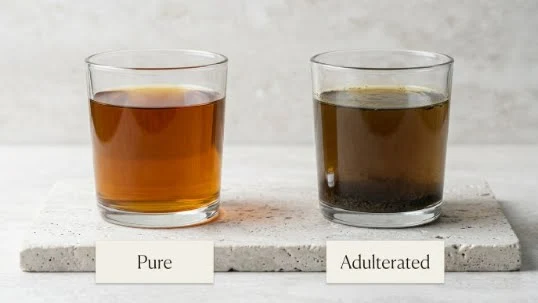
What to Look for in a Pure Shilajit Resin
Shilajit is formed in mineral-rich rock, and raw, unprocessed shilajit can contain heavy metals including lead, mercury, and arsenic at levels that are genuinely problematic for health. This is not a fringe concern – the FDA has issued warnings about specific shilajit products that failed heavy metal safety thresholds.
When you’re evaluating a shilajit product, look for:
- Third-party heavy metal testing with publicly available certificates of analysis (COA)
- Fulvic acid content disclosure – a meaningful shilajit product should specify the percentage; anything below 50% fulvic acid content is questionable for a premium resin
- Authentic sourcing transparency – Himalayan or Altai-sourced shilajit from verified altitudes
- No proprietary blend opacity – you should know exactly what’s in the formulation and at what dose
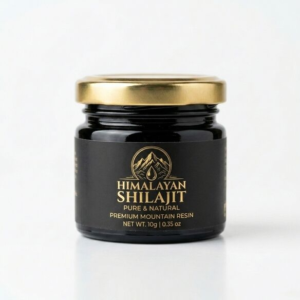
Himalayan Shila’s shilajit resin is third-party tested for heavy metals and discloses fulvic acid content – which is the baseline you should expect from any brand worth considering.
Who Should Be Cautious
Shilajit Gold is not suitable for everyone.
- People with hormone-sensitive conditions
– including certain prostate issues, PCOS, or estrogen
-sensitive cancers
– should consult a physician before use, as adaptogens can influence hormonal activity. - Pregnant or breastfeeding women
– there is insufficient safety data for use during pregnancy. - Anyone on thyroid medication
– ashwagandha has documented effects on thyroid hormone levels. If you’re on levothyroxine or similar medications, this is a real interaction worth discussing with your doctor. - People with autoimmune conditions
– ashwagandha can stimulate immune activity, which may be counterproductive for certain autoimmune presentations. - Those with gout
– gokshura has been associated with elevated uric acid in some individuals.
The above isn’t an exhaustive list, and individual responses vary. If you have any underlying medical conditions or take prescription medications, a conversation with a healthcare provider before starting any new supplement is genuinely worth doing – not just boilerplate advice.
Realistic Expectations
If you’re expecting Shilajit Gold to produce the kind of results you’d get from anabolic compounds – rapid strength gains, dramatic body composition shifts, measurable testosterone changes within two weeks – you’ll be disappointed.
What most consistent users report, and what the research partially supports, is subtler: better energy across the day, less post-training soreness over time, improved mood and stress resilience, and a gradual sense of increased physical capacity. The DOMS reduction is real for many people – recovery just feels easier, which means you can train harder and more frequently without the same accumulated fatigue.
These aren’t small things. But they accumulate over six to twelve weeks, not six to twelve days.
FAQs
Q: Can I take Shilajit Gold every day?
Yes, daily use is standard and generally well-tolerated for healthy adults. Most protocols suggest cycling off for one week every 6–8 weeks, though this isn’t strictly evidence-based – it’s more of a traditional practice.
Q: How long before I see results from Shilajit Gold?
Most people notice initial changes in energy and sleep quality within 2–4 weeks. Performance and recovery benefits tend to become more apparent at the 6–8 week mark.
Q: Is Shilajit Gold safe for women?
Yes, for most healthy adult women. The hormonal support properties are not exclusively male-specific – testosterone plays important roles in energy, bone density, and muscle function in women too. That said, women with PCOS or hormonal sensitivities should consult a doctor first.
Q: Can Shilajit Gold replace a testosterone booster?
It’s a different approach, not a direct replacement. Synthetic test boosters typically attempt to force a hormonal response; Shilajit Gold supports the conditions for natural hormone regulation. Whether one is “better” depends on your goals, health status, and drug-testing requirements.
Q: What’s the difference between shilajit resin and shilajit capsules?
Resin is the least processed form and generally has higher bioavailability. Capsules are more convenient and easier to dose accurately but often contain lower concentrations of active compounds. For serious use, resin is usually the preferred form among practitioners.
Q: Can I take Shilajit Gold with creatine?
Yes. There’s no known interaction, and some evidence suggests the combination may be beneficial. See the stacking section above for detail.
Conclusion
The shift away from synthetic testosterone support products in elite training circles isn’t driven by trend-chasing. It’s driven by a combination of safety concerns around poorly-disclosed formulations, growing interest in sustainable performance, and a slowly expanding evidence base for adaptogenic approaches.
Shilajit Gold sits at an interesting intersection: ancient formulation, increasingly modern validation. The research isn’t complete – it rarely is with herbal compounds – but what exists is more encouraging than skeptics often acknowledge.
If you’re considering it, the most important factor is quality. Source from a brand that provides third-party heavy metal testing and discloses what’s actually in the product. And give it time – at minimum, eight weeks – before drawing conclusions.
Ready to try it? Himalayan Shila’s Shilajit Gold is sourced from verified Himalayan altitudes and heavy-metal tested. Shop the resin Now.
Disclaimer
This article is for informational and educational purposes only. It does not constitute medical advice and should not be used as a substitute for professional medical consultation, diagnosis, or treatment. Always consult a qualified healthcare provider before starting any new supplement, particularly if you have an existing medical condition or take prescription medications. Individual results vary. Statements about supplements have not been evaluated by the FDA. These products are not intended to diagnose, treat, cure, or prevent any disease.